
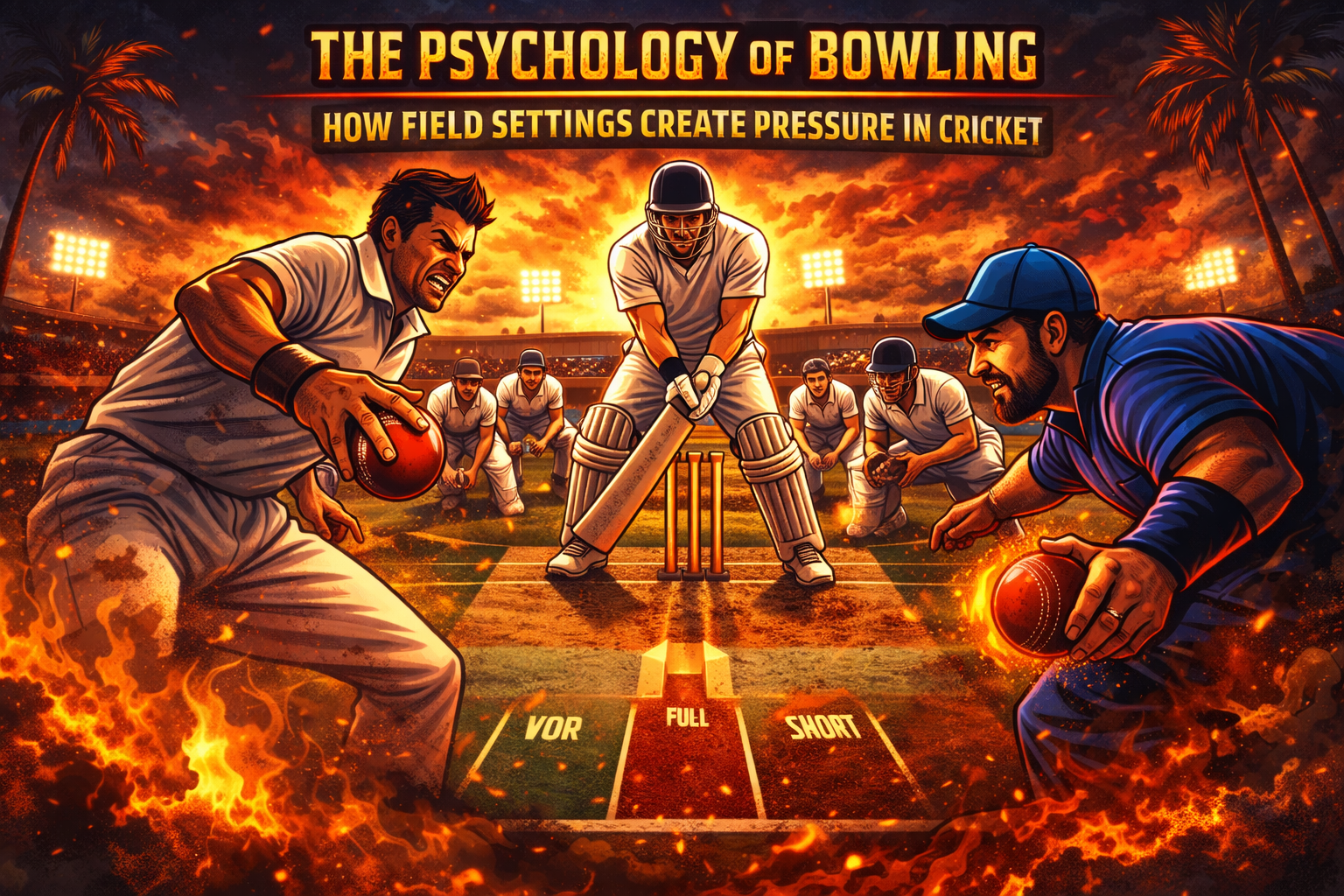
Cricket is not only a battle of skill — it is also a battle of psychology. Bowlers and captains constantly try to influence a batter’s thinking through clever field placements, disciplined bowling, and pressure-building tactics.
A well-set field can make a batter hesitate, overthink, or attempt risky shots. Even when wickets are not falling immediately, pressure created by field settings often leads to mistakes later in the spell.
This article explains how different bowling styles, pitch conditions, and field placements work together to mentally challenge batters in all formats of cricket.
Table of Contents
ToggleWhy Field Placements Matter Mentally
Field settings affect how batters:
- Choose scoring areas
- Judge risk
- Handle pressure
- Rotate strike
- Build innings
A batter who sees attacking close catchers may become defensive, while a boundary-packed field may tempt risky aerial shots.
Great captains use fields not only to stop runs but also to manipulate decision-making.
1. Slip Cordons and Pressure Outside Off Stump
Overview
Slip fielders create immediate psychological pressure, especially against fast bowlers.
When a batter sees:
- 3 slips
- Gully
- Wicketkeeper standing up close
they understand the bowler is attacking for wickets.
Best Pitch Conditions
Ideal Surfaces
- Green pitches
- Swing-friendly conditions
- Early morning moisture
Typical Field Setup
- 3 slips
- Gully
- Point
- Mid-off
- Mid-on
- Fine leg
Psychological Impact
Batters begin:
- Leaving balls cautiously
- Avoiding drives
- Playing with hard hands
- Doubting footwork
Bowling Strategy
- Bowl full outside off stump
- Maintain patience
- Build dot-ball pressure
2. Close Catchers Around Spin Bowlers
Overview
Spin bowlers often surround batters with close fielders.
Positions like:
- Silly point
- Short leg
- Leg slip
create intense mental pressure.
Best Pitch Conditions
Ideal Surfaces
- Dry turning wickets
- Cracked fifth-day pitches
Typical Field Setup
- Slip
- Short leg
- Silly point
- Leg slip
- Midwicket
- Long-on
Psychological Impact
Batters may:
- Stop using feet confidently
- Become hesitant in defense
- Misjudge spin due to pressure
- Rush attacking shots
Bowling Strategy
- Use flight and dip
- Slow the pace occasionally
- Target rough patches
3. Boundary Rider Traps in T20 Cricket
Overview
In T20 cricket, captains often place fielders exactly where batters prefer hitting sixes.
This creates pressure to:
- Find unusual angles
- Force innovation
- Attempt low-percentage shots
Best Pitch Conditions
Ideal Surfaces
- Flat batting tracks
- Slow two-paced pitches
Typical Field Setup
- Long-on
- Long-off
- Deep midwicket
- Deep square leg
- Deep cover
- Third man
Psychological Impact
Batters become impatient because:
- Gaps disappear
- Singles feel ineffective
- Dot balls increase pressure
Bowling Strategy
- Bowl wide yorkers
- Use slower balls
- Change pace constantly
4. Off-Side Packing Strategy
Overview
Captains sometimes overload the off side to deny easy runs.
This tactic is especially effective against:
- Strong cover drivers
- Timing-based batters
Best Pitch Conditions
Ideal Surfaces
- Slow wickets
- Low-scoring conditions
Typical Field Setup
- Point
- Backward point
- Cover
- Extra cover
- Mid-off
- Third man
Psychological Impact
Batters often:
- Force risky leg-side shots
- Lose rhythm
- Take unnecessary chances
Bowling Strategy
- Bowl tight outside off stump
- Avoid over-pitching
- Maintain disciplined lines
5. Leg-Side Trap for Aggressive Pull Players
Overview
Some batters naturally attack short balls.
Captains exploit this by setting leg-side catching fields.
Best Pitch Conditions
Ideal Surfaces
- Hard bouncy wickets
- Fast tracks with carry
Typical Field Setup
- Deep square leg
- Fine leg
- Leg gully
- Deep backward square
- Short leg
Psychological Impact
Batters may:
- Continue attacking emotionally
- Misjudge bounce
- Rush pull shots
Bowling Strategy
- Alternate bouncers and hard lengths
- Bowl into body line
- Surprise with pace variation
6. Dot Ball Pressure and Silent Pressure Fields
Overview
Not every field is aggressive. Sometimes captains use defensive-looking fields to quietly build pressure.
Repeated dot balls often frustrate batters more than attacking fields.
Best Pitch Conditions
Ideal Surfaces
- Slow pitches
- Difficult scoring surfaces
Typical Field Setup
- Sweeper cover
- Deep point
- Long-on
- Long-off
- Midwicket
- Fine leg
Psychological Impact
Batters begin:
- Chasing risky boundaries
- Losing patience
- Attempting forced innovation
Bowling Strategy
- Bowl stump-to-stump
- Remove scoring angles
- Force batters into errors
How Different Pitch Types Affect Mental Pressure
| Pitch Type | Psychological Effect on Batters |
|---|---|
| Green Pitch | Fear of edges and movement |
| Dry Turning Pitch | Fear of spin and close catchers |
| Flat Pitch | Pressure to score quickly |
| Slow Pitch | Frustration due to timing issues |
| Hard Bouncy Pitch | Fear of short balls and bounce |
| Cracked Surface | Uncertainty about bounce |
How Great Captains Use Bowling Psychology
Top captains constantly adjust fields based on:
- Batter behavior
- Confidence levels
- Scoring patterns
- Match situation
Examples:
- Moving a fielder slightly squarer to tempt a shot
- Leaving a deliberate gap as bait
- Bringing slips back after defensive overs
- Changing fields ball-by-ball in T20 cricket
Psychological Bowling in Different Formats
Test Cricket
Focus
Patience and sustained pressure.
Common Tactics
- Slip cordons
- Bat-pad catchers
- Long spells outside off stump
ODI Cricket
Focus
Building pressure through run restriction.
Common Tactics
- Ring fields
- Controlled boundary protection
- Rotation-denial fields
T20 Cricket
Focus
Forcing batters into risky attacking shots.
Common Tactics
- Boundary traps
- Wide yorker fields
- Slower-ball deception
Famous Examples of Field Trap Strategies
Leg Theory (Bodyline)
England famously used leg-side traps against Don Bradman in the 1930s.
Slip Domination in England
Fast bowlers use large slip cordons in swinging English conditions.
Spin Traps in India
Indian spinners frequently surround batters with close catchers on turning tracks.
Conclusion
Field placements are one of cricket’s most powerful psychological weapons. A smart captain uses fielders not only to stop runs but also to influence how batters think and react under pressure.
Different pitch conditions create different mental challenges:
- Green pitches create fear of edges
- Dry pitches increase pressure against spin
- Flat wickets force bowlers to rely on traps and patience
The best bowling attacks succeed because they combine skill, discipline, and psychological pressure through intelligent field settings.